Granite memorial complexes in Moscow
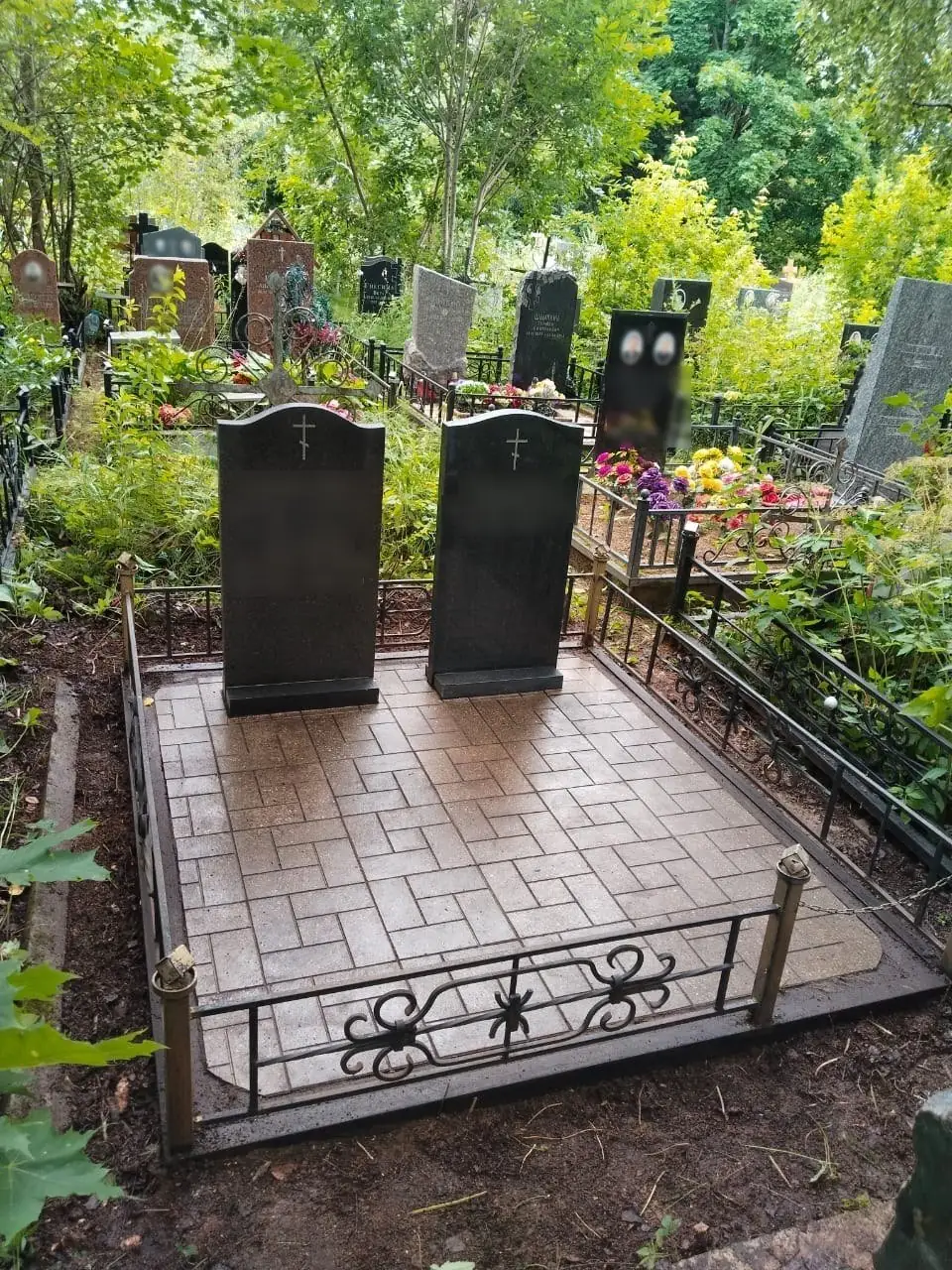
A granite complex is the whole plot done as one piece of work rather than a headstone standing on bare earth: the stele and its plinth, a flower bed, a kerb around the plot, and a paved surface inside it, all set on a foundation built to carry the weight.
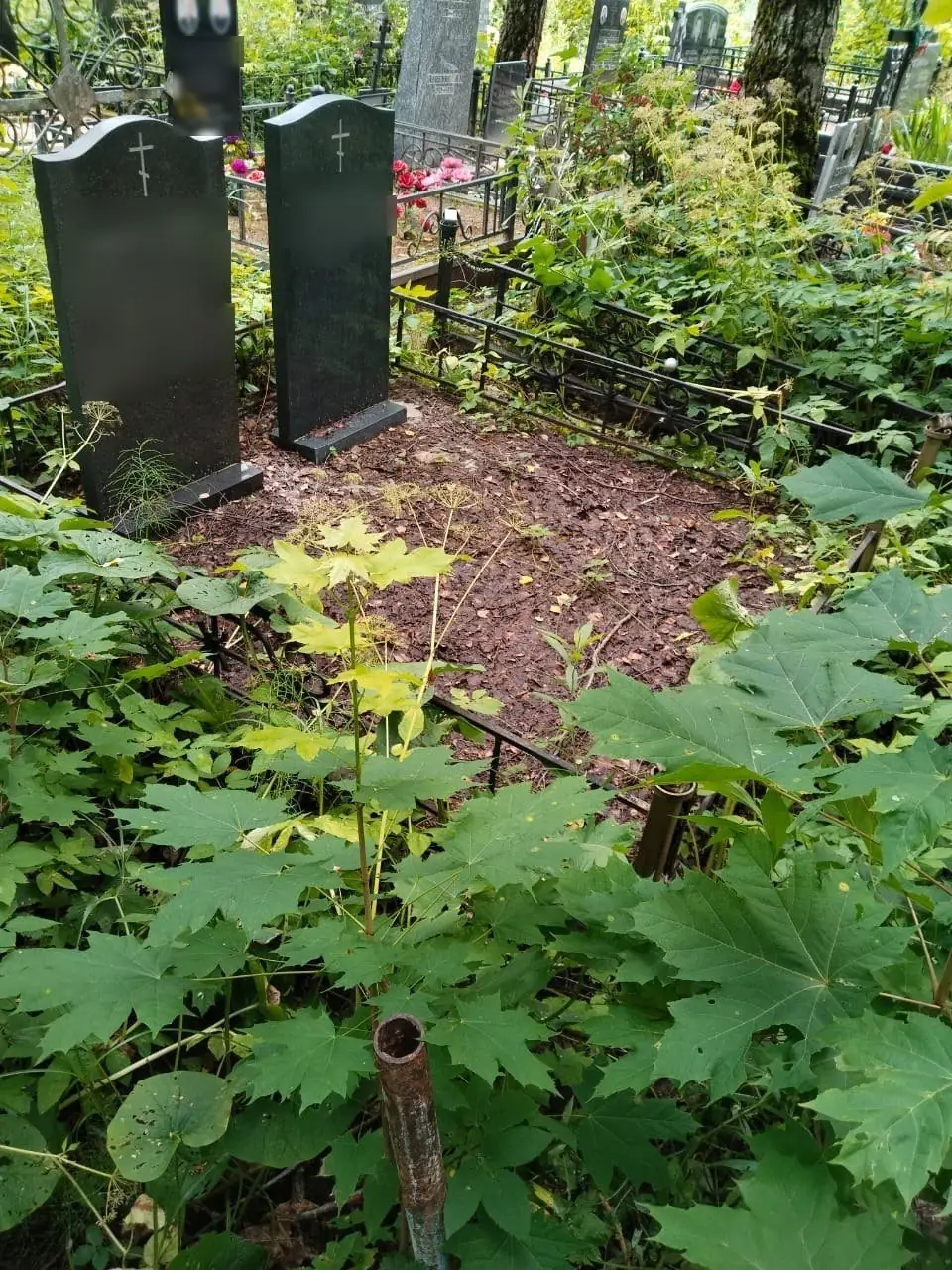
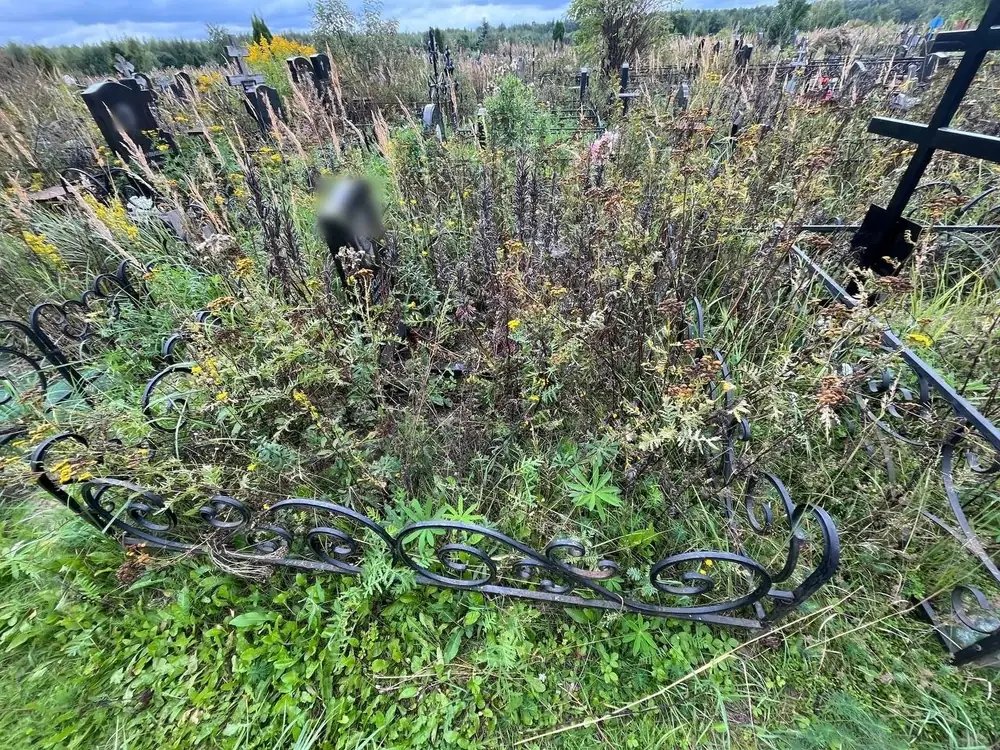
Families abroad usually come to this when the alternative has been tried — a stone alone, with grass and soil around it, which needs weeding several times a year forever. A paved plot needs washing, and that is a different order of maintenance.
What a complex actually consists of
The stele and plinth are the visible monument. The flower bed frames the grave. The kerb defines the plot and holds the surface. The paving — granite slabs, porcelain stoneware or, on a budget, stone chippings — covers the ground so that nothing grows through it.
Underneath all of it is a reinforced slab. On a full granite complex this is not optional: granite is heavy, the ground at a cemetery is disturbed ground, and a complex set on unprepared soil moves apart within a few seasons. A 10 cm slab with double reinforcement costs ₽15,000 per square metre.
Where a plinth already runs round the plot, a separate kerb is unnecessary — the paving meets the plinth with an expansion joint. Where there is nothing, a plinth with formwork can be built instead of a kerb, ₽15,000–80,000, and it is done in the same visit.
Why it is quoted from photographs
Plot sizes at Moscow cemeteries vary, access varies, and the ground varies. A quote made without seeing the plot is a guess, and the corrections arrive later, when the family has already committed.
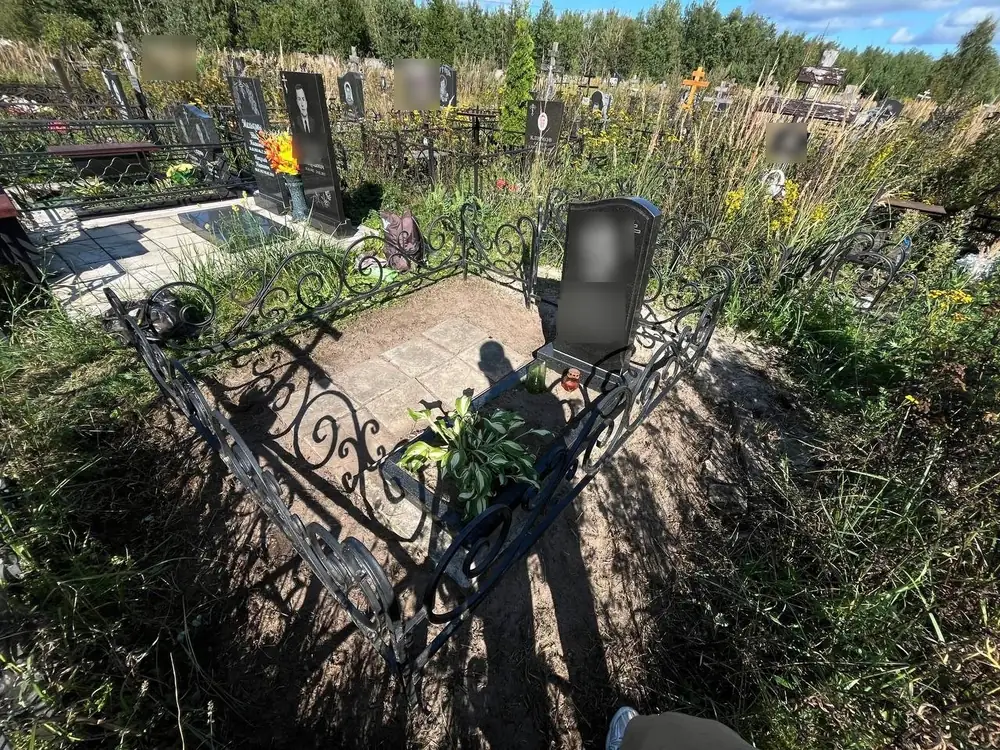
We photograph the plot — general view, corners, and the area immediately around the monument — and measure it. From that we can see the area, the state of the ground, whether a plinth already exists and what has to be removed first: old chippings, roots, sunken sections of the previous surface.
You then receive a fixed quote and a layout. A complete plot rebuild typically falls in the ₽10,000–100,000 range depending on the combination of work; the quote is fixed before anything starts, and payment follows the before/after photo report.
The details that decide whether it lasts
Paving is never bonded rigidly to the plinth. An expansion joint of a few millimetres is left round the base, because with seasonal ground movement the surface and the plinth move differently and a rigid join tears the paving at the base. This is the most common failure we are asked to repair.
The surface is laid with a slight fall away from the stele, so that water runs off the monument rather than standing at its foot.
The monument usually does not need to be removed: the paving is cut round the plinth with a diamond blade in place. Removal is needed in only two cases — the monument has visibly sunk or tilted, in which case it is reset first, or you are replacing the plinth or the headstone itself.
Ordering the whole plot from abroad
This is the work families abroad order most often as a single project, because it is the one that ends the cycle of annual weeding. It is also the work where the quote matters most, so we do not start it from a price list.
Send us the cemetery and the name; we locate and photograph the plot, measure it, and send you the layout and a fixed quote. Permission from the cemetery administration is included in the work.
If a new monument is part of the project, the paving and plinth are costed in the same quote — which is cheaper than sending a crew out twice.
Prices
| Complete plot improvement | ₽10,000–100,000 | depending on the combination of work; quote fixed from photographs before starting |
| Reinforced foundation slab | ₽15,000 per m² | 10 cm, double reinforcement, under a heavy granite complex or granite fence |
| Plinth with formwork instead of a kerb | ₽15,000–80,000 | a capital solution where no surround exists; done in the same visit |
| Resetting a sunken monument before paving | ₽8,000–25,000 | needed only if the stone has tilted — visible in the photographs |
| Removal of an old monument or plinth | ₽5,000–20,000 | separate line, shown in the quote before work begins |
Prices are in roubles because that is what the work is paid for in; at roughly ₽90 to the dollar you can read them across directly. The quote is fixed before work begins, and payment is due after you receive the photo report. Full list — services & prices.
Questions we are asked
Does the monument have to come down to lay paving?
In most cases no. The paving is cut round the plinth in place, with an expansion joint at the base and a fall away from the stele. Removal is needed only if the monument has sunk or tilted, or if you are replacing the plinth.
Is a foundation really necessary?
For a full granite complex, yes. Granite is heavy and cemetery ground is disturbed ground. For lighter work it often is not, and we do not add it by default.
How long does it take?
The work itself is a matter of days once materials are on site; the schedule is set by the season and by the administration’s permission. Concrete work is not done between November and April.
What is guaranteed?
Two years on the work: subsidence, joints opening and the surface going out of true because of how the base was prepared. Chips from impact and fading of the paving material itself are the manufacturer’s responsibility — we say so before the work, not after.
Order from anywhere in the world
We work at every cemetery in Moscow and the Moscow region, and across Russia on request. Write to us with the cemetery and the full name of the person buried — if the plot number has been lost, finding it is part of the job. We agree a payment method that works for your country when the order is confirmed, including payment through relatives in Russia.
You can write in English — we reply in English.